
Legend and history
The history of Filicaja
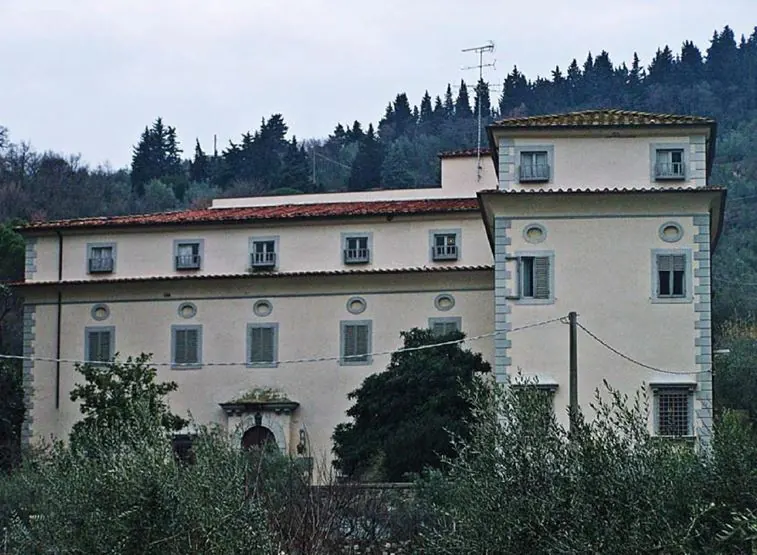
Filicaja is a small hamlet in the municipality of Montaione, where legend and archive records meet: from the legendary origins of its name to the deed by which the da Filicaja family acquired the property in 1452.
The legend
Filli mia bella
According to legend, a young nobleman from Volterra named Ajone freed a girl, Figline, who had been abducted by a certain Gambasso: he married her and founded both the village of Monte Ajone – from which today's name, Montaione, is said to derive – and the castle of Figline. A fierce rivalry long persisted between the descendants of Ajone and those of Gambasso (the two neighbouring towns, Montaione and today's Gambassi Terme, have always been “rivals” in real history too).
Generations later, the castle was destroyed by an enemy army, and its inhabitants, having returned to idolatry, decided to sacrifice the most beautiful girl in the village, named Filli, to the gods. A horrified Florentine knight rushed to save her, having a heifer sacrificed in her place – hence his nickname, the “Sire della Vitella” (Lord of the Heifer). Filli and her rescuer married and rebuilt the castle, and he was so much in love that he constantly called her “Filli mia bella” (my beautiful Filli) and “Filli cara” (dear Filli): from these words the name “Fillicara” is said to have arisen, which later became “Filicaja”.
In 1623 Michelangelo Buonarroti the Younger told the legend in his short poem l'Ajone, imagining that in the da Filicaja palace even the fountains flowed with wine:
«...dove si sguazza, e mangia altro che ghiande,
e d'un buon vino vi beon le pile...»
(“...where they revel and eat far better than acorns, / and even the fountain basins drink good wine...”)
— Michelangelo Buonarroti the Younger, l'Ajone, 1623
The historical record
From the origins to the Renaissance
The earliest records of a castle called Figline on this site date back to the early twelfth century, perhaps exactly where Villa da Filicaja stands today, although some scholars believe the original fortification stood a few hundred metres further south. Destroyed in 1297, the castle was later rebuilt using, among other things, materials from a late Roman villa whose remains, with traces of mosaics, lie about a kilometre away. This origin, together with a small error spread by a 1930s tourist guide, has over time fuelled a number of historical misunderstandings, including the myth of a “Medici villa” that never existed here.
The name itself complicates matters further: today's locality of Figline lies about four hundred metres south of Filicaja, and it is still debated whether it really corresponds to the site of the medieval castle. In the small church of Sant'Antonino, dedicated to the hamlet's patron saint, a bas-relief still recalls a small miracle from local tradition: the raising from the dead of a boy from Filicaja.
The family's ties to Florentine military and political life are documented from the Renaissance onwards: on 8 June 1509 Antonio da Filicaja entered Pisa victorious alongside Averardo Salviati and Niccolò Capponi, at the head of his own troops, which were based at the castle of Filicaja itself.
The family
In the service of Florence
While vines and olives were being grown at Filicaja, in Florence the family played a leading role in the life of the Republic. Alessandro da Filicaja (1429–1512), twice Gonfaloniere di Giustizia, in 1467 and 1474, was a friend of Lorenzo the Magnificent. These were the years in which, in 1452, Ser Giovanni da Filicaja bought from the people of Figline the land from which the estate was born. Later, under the Grand Duchy, the da Filicaja sat five times in the Senate.
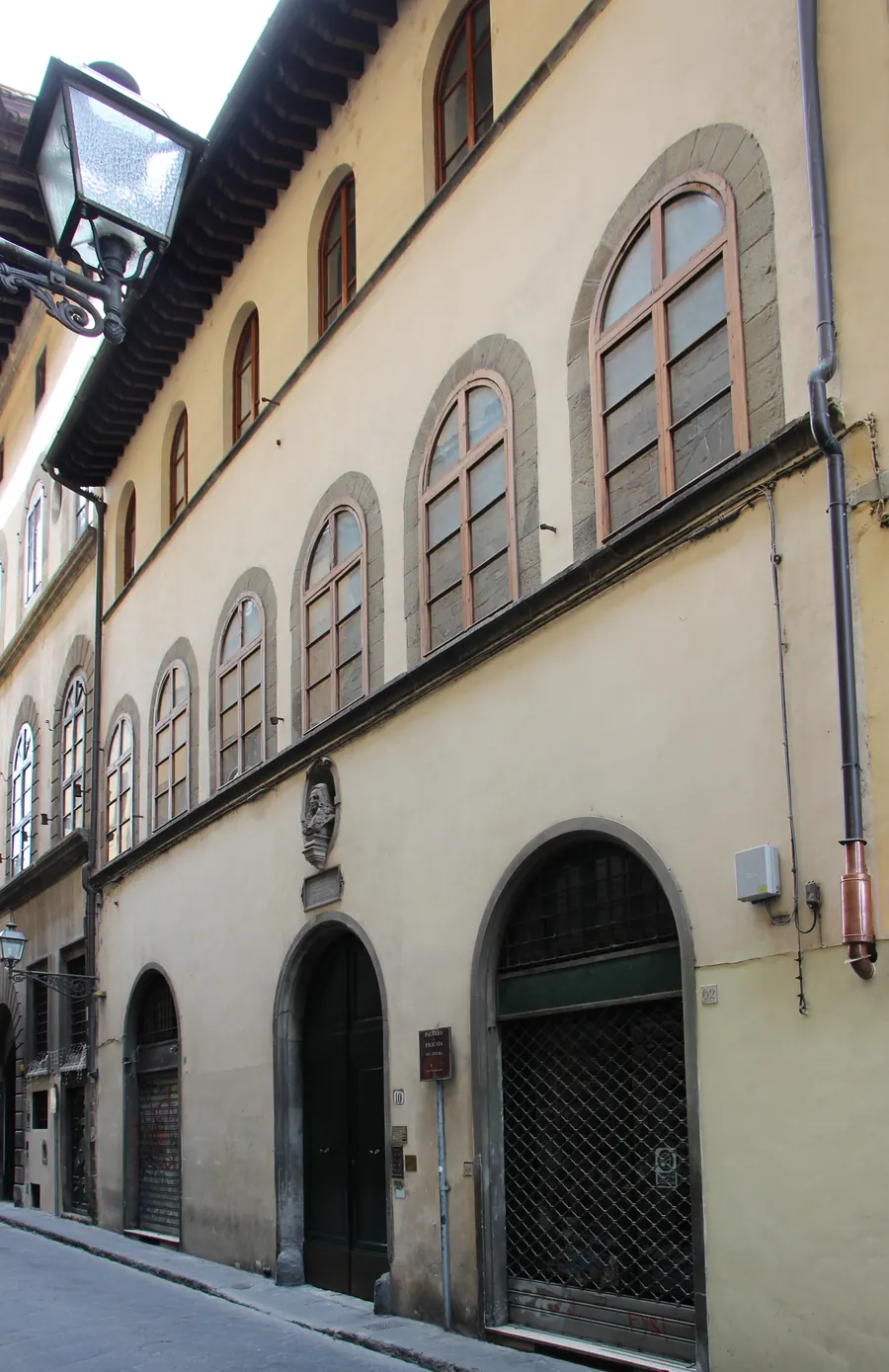
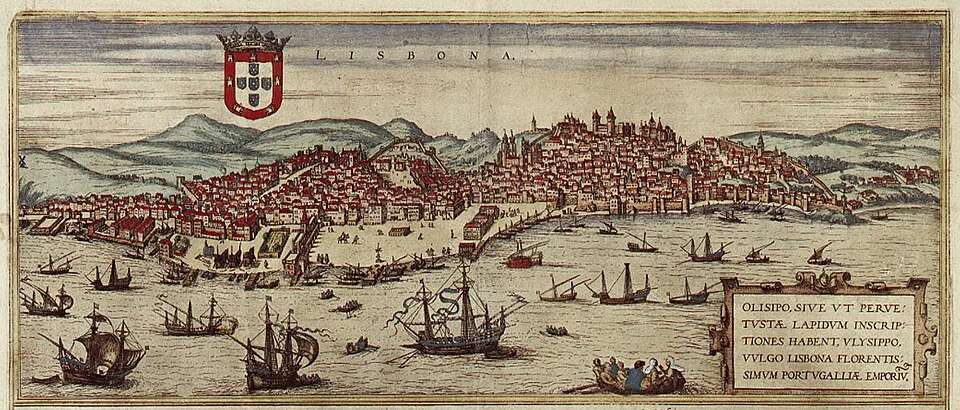
Like many Florentine families, the da Filicaja were also merchants, with a trading house in Lisbon. In the city the family lived in the palazzo in Borgo degli Albizi, built between the fourteenth and sixteenth centuries; in the countryside, besides Filicaja, it owned the villa at Santa Lucia, just outside Prato. Their coat of arms – gold with three red chevrons – can still be seen on the Palazzi Pretori of many Tuscan towns, from Volterra to Arezzo and from Pistoia to Scarperia, where members of the family served as podestà and vicars.
Between Florence and the New World
Baccio da Filicaja, engineer in Brazil
At the end of the sixteenth century the da Filicaja trading house in Lisbon closed its doors, in the difficult years after 1580, when Portugal passed to the Spanish crown. Little remains of that Lisbon: the merchants' quarter, with its Rua Nova dos Mercadores, was wiped out by the earthquake of 1755, and the city we see today was rebuilt from scratch by the Marquis of Pombal.
It was there that one of the family's most remarkable adventures had begun. Baccio da Filicaja, born in Florence between 1565 and 1575, had worked there as a young man for four years; back in Florence, he devoted himself to mathematics, architecture, artillery and cosmography. By 1597 he was in Brazil as engenheiro-mor, chief engineer of the Portuguese colony, in the service of Governor Francisco de Sousa: he restored its fortresses, fortified its harbours, commanded its artillery and accompanied the governor in the search for gold and silver mines.
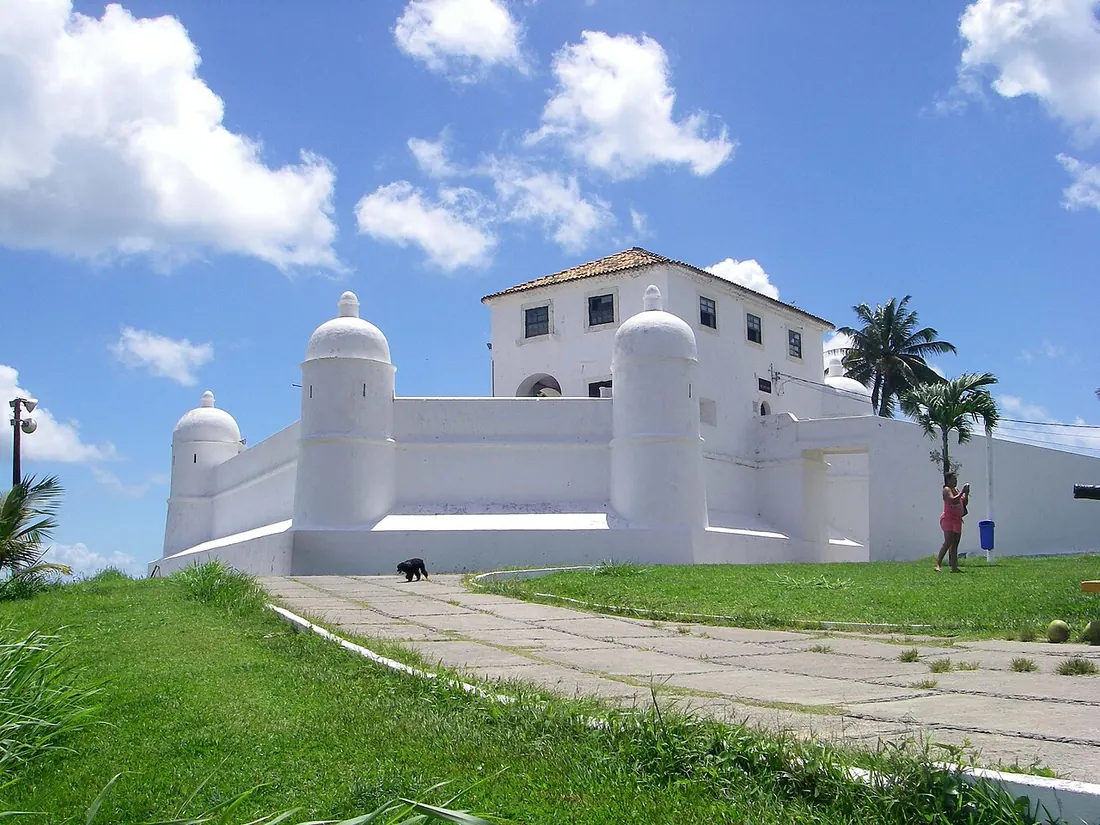
In 1603 he took part in Pero Coelho de Sousa's expedition towards Maranhão and, in the same year, together with the Jesuit Francisco Dias and the engineer Geraldo Betting, built the church of Nossa Senhora de Monte Serrat in Salvador da Bahia; beside it, on the headland overlooking the bay, he designed the Fort of Monserrate, which still stands there today. In 1608 he was still writing to Grand Duke Ferdinando I to tell him of his exploits: his letters are kept in the Medici Archive in Florence. The last record of him dates from 1628, in Bahia.
The poet
Vincenzo da Filicaja
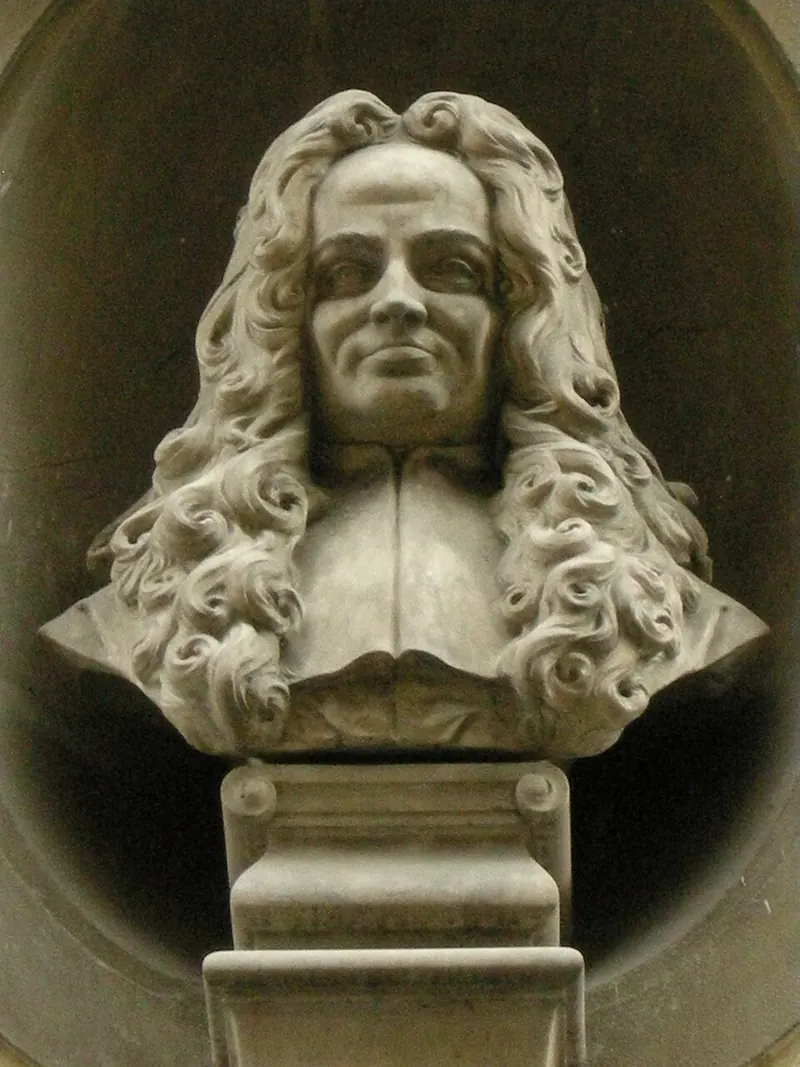
The most celebrated member of the family is Vincenzo da Filicaja (Florence, 1642–1707), one of the leading Italian poets of his time. A member of the Accademia della Crusca and of the Arcadia, where he was known as Polibo Emonio, he became famous throughout Europe for the odes he wrote on the liberation of Vienna from the Turkish siege of 1683, and his sonnets on Italy were read and translated well into the nineteenth century. Cosimo III de' Medici made him a senator in 1695, then governor of Volterra (1696) and of Pisa (1700). Whenever he could, he withdrew to Filicaja, far from the duties of the court.
He died in Florence in 1707 and was buried in the family chapel, dedicated to Saint Julian, in the church of San Pier Maggiore, where his son Scipione had a monument raised to him. In 1751 Scipione also had a painting by Francesco Conti placed there, Saint Antoninus Raising a Child of Filicaja from the Dead: the same miracle recalled by the bas-relief in the little church of Sant'Antonino, here in the hamlet.
The church of San Pier Maggiore no longer exists. In September 1783 one of its columns suddenly collapsed, revealing a wooden core; in 1784 Grand Duke Pietro Leopoldo ordered the church to be demolished. Only the arches of its portico survive, known as the Arco di San Pierino. The poet's memory is now entrusted to a cenotaph in the basilica of Santa Croce.
From the 16th century to today
A family home, always lived in
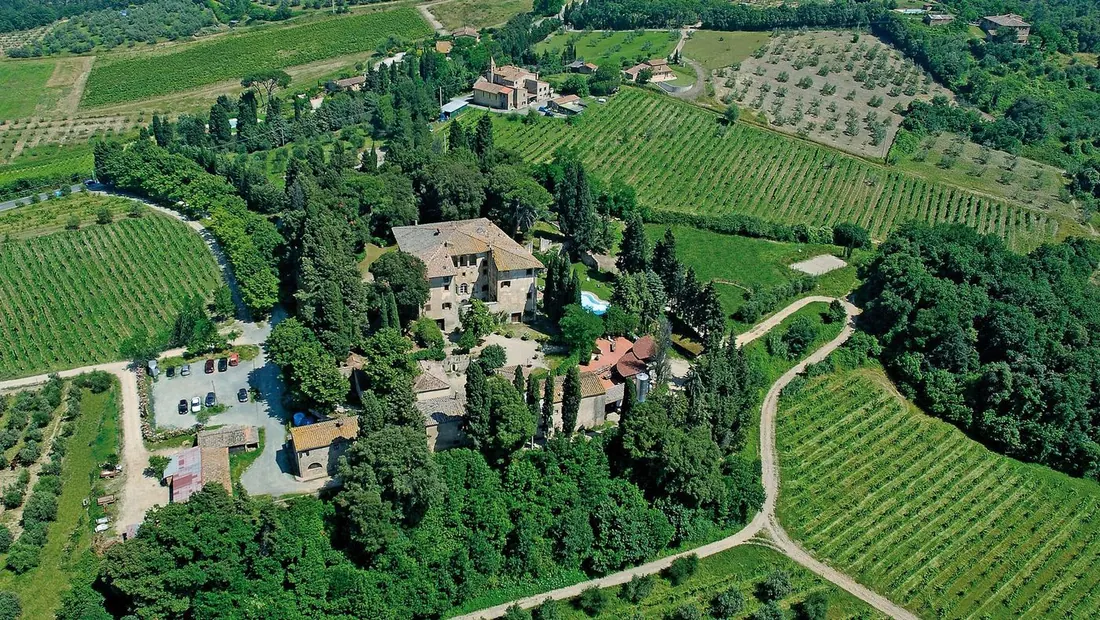
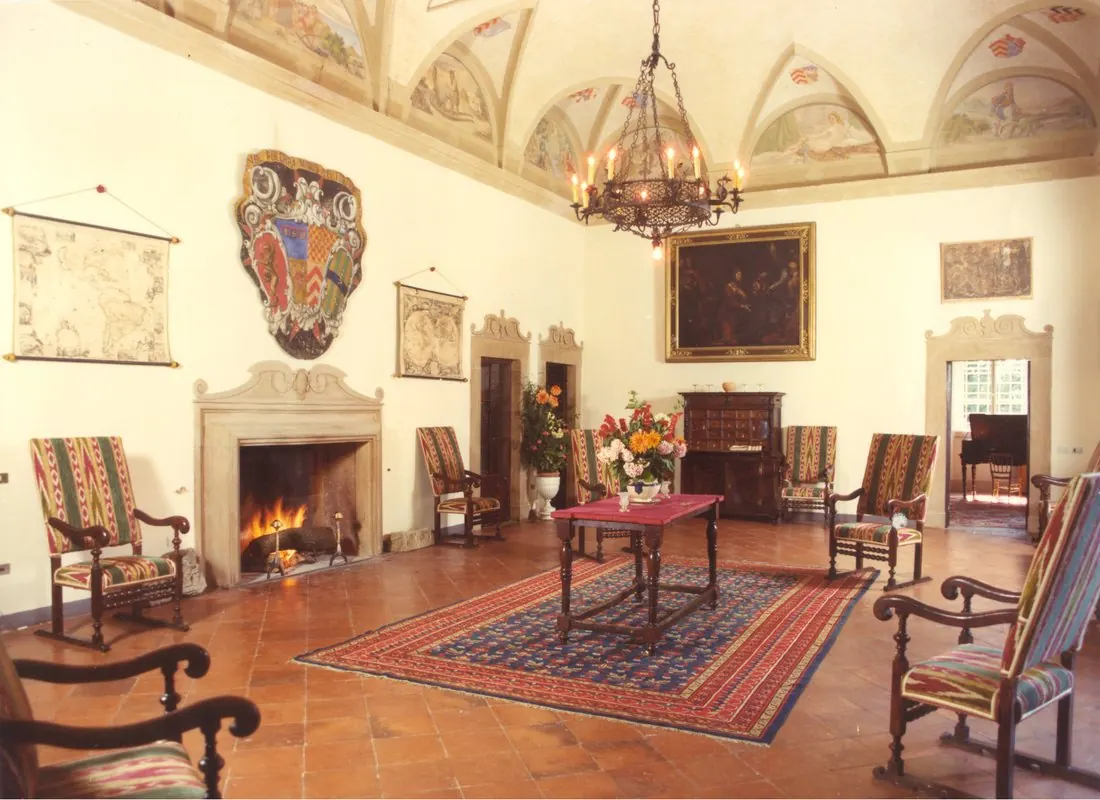
Over the centuries the small hamlet was transformed several times before taking on its present appearance. Villa da Filicaja still preserves a medieval façade facing east and a second, north-facing façade in late sixteenth-century style, though built only in 1906. Between 1900 and 1908 Count Andrea da Filicaja Dotti commissioned major alterations to the interiors, aiming to recreate seventeenth-century rooms: he had sail vaults built in place of the original coffered ceilings and rearranged the layout of the rooms to the taste of the time.
The hamlet has remained the property of the same family, today represented by the Counts Nardi-Dei da Filicaja, and was also the home of the poet Vincenzo da Filicaja. For decades some local guidebooks repeated the legend that Grand Duke Cosimo III de' Medici had given the little hamlet to the poet: a story that turned out to be unfounded. Only in 2003, thanks to access to the family's private archive, were historians able to find the original deed by which the property was bought from the people of Figline, dated 21 June 1452 and signed by Ser Giovanni di Simone da Filicaja: a document proving that the estate belonged to the da Filicaja family long before the poet was born, and so, after centuries, revealing its true origin.
The origin of the name
From Figline to Filicaja
The place was originally called Figline, or Castello di Figline. With the arrival of the family it became Filicaja, or Al Filicaja – but over the centuries the estate has also been called Fattoria S. Antonio (after the small church dedicated to the saint) or Tenuta Al Filicaja, and at times even the villa itself was referred to as Villa S. Antonio, depending on the period and on who owned it. The family itself, known until the mid-thirteenth century as “della Vitella” (or “Tebaldi”), took the name “da Filicaja” with the advent of the Florentine Republic, so as not to appear noble and thus be able to hold public office: it succeeded well, giving the Republic twelve Gonfalonieri and sixty-six Priors between 1284 and 1523.
Even in the twentieth century, what the place was called often depended on who was writing about it – and even on the owner himself: it is said that at the beginning of the century Andrea da Filicaja Dotti normally used “Villa da Filicaja” for the villa and “Tenuta Al Filicaja” for the estate, but switched to “Villa S. Antonio” in his correspondence with the Church or the municipality; on the wine labels the estate appeared as “Tenuta Al Filicaja del Conte da Filicaja Dotti”, while the family account books simply spoke of the “Fattoria di Figline in Val d'Elsa”. A shifting of names that, more than any document, shows how personal, before it was official, the bond between the family and this place has been over the centuries.